
5 Signs You Need a Sewer Line Replacement
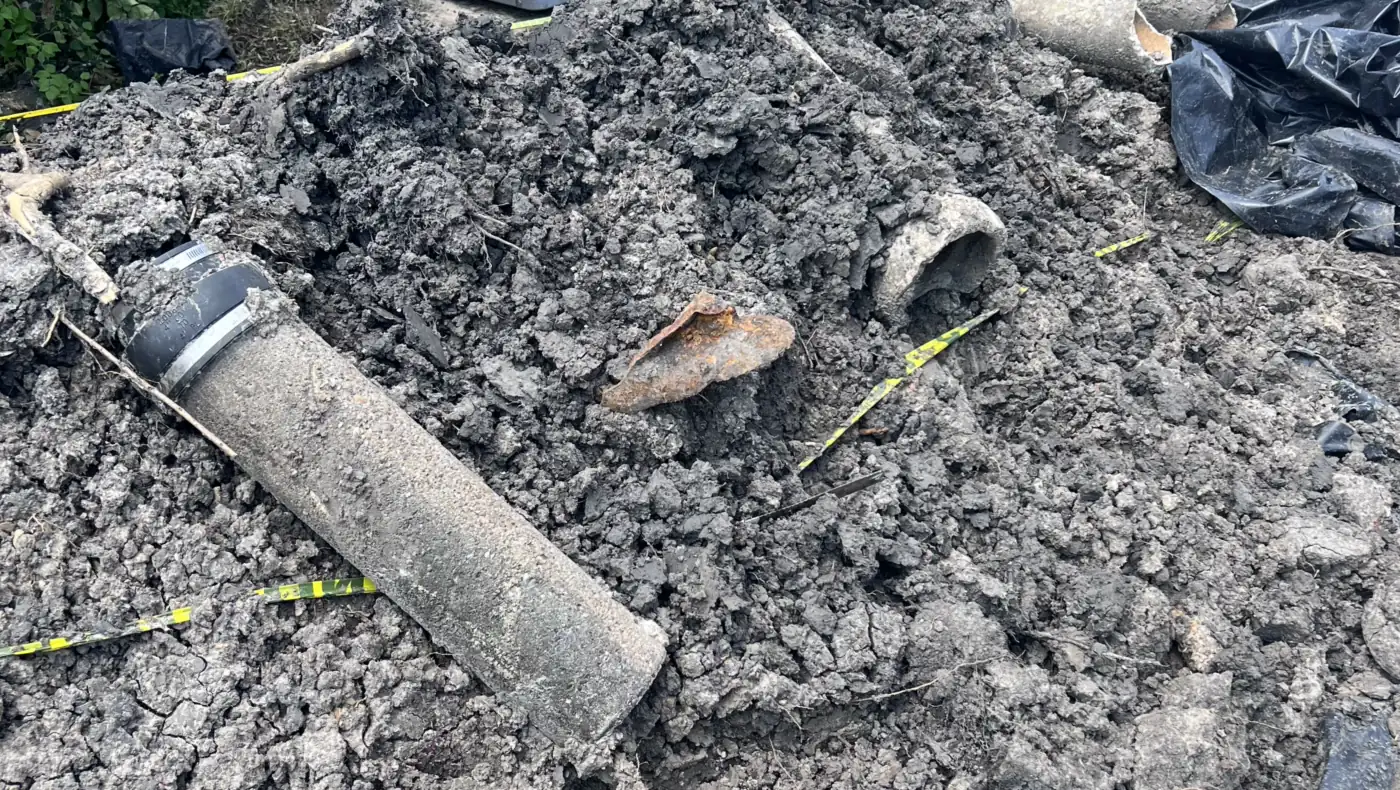
If your Houston home was built in the 1960s, 70s, or 80s, there's a good chance the sewer line running under your slab is original. That means it's made of cast iron or clay — materials that were standard at the time but were never meant to last forever.
I've worked on hundreds of these homes across Sugar Land, Missouri City, and the older neighborhoods of Southwest Houston. When cast iron starts to go, it doesn't fail all at once. It gives you signs. The homeowners who catch those signs early save thousands. The ones who ignore them end up with raw sewage in their yard or a collapsed line under their foundation.
Here are the five things I tell homeowners to watch for.
1. Slow drains throughout the entire house
One slow drain usually means a clog — and that's a simple fix. But when every drain in the house is sluggish at the same time, that points to the main sewer line. The whole system backs up when the primary line is compromised, whether from root intrusion, collapse, or heavy scale buildup inside old cast iron pipe. Don't keep snaking individual drains. That's treating the symptom, not the problem.
2. Sewage smells in your yard or near your foundation
Your sewer line is supposed to be a closed system. If you're catching a sulfur or rotten egg smell outside — especially in the yard between your house and the street — something has cracked or separated underground. Houston's expansive clay soil is brutal on buried pipes. It shifts with every dry spell and every heavy rain we get. Over decades, that movement breaks joints and cracks old clay or cast iron lines.
3. Unusually green or lush patches of grass
Sewage is basically fertilizer. If there's a section of your yard that stays greener than everything around it — or grows faster — that's often a sign of a slow leak underground. The grass doesn't know it's being fed by sewage; it just looks suspiciously healthy. Walk your yard and pay attention. A line running from your house toward the street that has noticeably lusher grass along it is worth investigating.
4. Foundation cracks near the sewer line path
This one's specific to Houston's slab construction. When a sewer line under the slab leaks, it erodes the soil around it. That void destabilizes the foundation above it. The result is cracking — sometimes in the slab itself, sometimes in the walls above it. If you've got fresh cracks and you can't explain them, a sewer camera inspection can rule out (or confirm) an underground leak as the cause before you spend money on foundation repair.
5. Repeated clogs, even after professional cleaning
If you've had a plumber out to clear a sewer line clog and it comes back within a few months — or repeatedly — the pipe itself has a structural problem. Root intrusion, pipe belly (a sag in the line that traps waste), or partial collapse will keep causing blockages no matter how many times you snake it. At some point, you're just paying to kick the can down the road.
What to do next
None of these signs alone is a death sentence for your sewer line. Some can be addressed with targeted repair. But you can't know what you're dealing with until you look. A sewer camera inspection is the only way to see exactly what's going on down there — where the damage is, how extensive it is, and what the right fix actually is.
It also helps to know which part of the line is yours. In Houston, the cleanout at the street is the boundary: Houston Public Works says cleanouts "mark the limits of the City's public collection system," and problems with private wastewater pipes, "which are typically closer to the home, are the responsibility of the homeowner." If sewer water is standing at that street cleanout, the City says to call 311. If it's dry and you're still backing up, the problem is on your side. (Houston Public Works, Protect Our Pipes)
If you're seeing one or more of these signs, give ARG Plumbing a call at (832) 419-3411. We'll run a camera through your line, show you exactly what we find, and give you an honest assessment of whether you need a spot repair, a full replacement, or nothing at all. No guessing, no unnecessary work.

Hristo
Master Plumber · ARG Plumbing
Need Help?
Have a Plumbing Question?
Call us or schedule service online. Honest answers, no pressure.